Nepal Helicopter Service | Kathmandu, Nepal
For a lot of families in India, Muktinath is a once-in-a-lifetime darshan. It is also a hard place to reach. The temple sits at 3,710 metres in Mustang, behind the Annapurna and Dhaulagiri ranges, and the usual way in is a small plane to Jomsom followed by a jeep, or a long, rough drive up the Kali Gandaki valley from Pokhara. Planes to Jomsom are cancelled often because of wind, and the drive takes most of a day each way.
A helicopter turns all of that into one morning. You fly in, complete your darshan, and are back in Pokhara or Kathmandu by lunchtime. This guide covers the questions we are asked most by pilgrims coming from India, so you can plan without surprises.
Table of Contents
Documents Indian citizens need
Indian citizens do not need a visa for Nepal. If you fly into Kathmandu, carry a valid Indian passport or your Election Commission voter ID card with photo. Aadhaar is not accepted as an entry document for air travel. Keep the original with you on the helicopter day too, because we need your details for the flight manifest and permits.
For children, bring a passport if they have one. If not, check the current rules with your airline before you travel, as requirements for minors can change.
Muktinath lies inside the Annapurna Conservation Area, so every visitor needs an ACAP permit. Indian and other SAARC citizens pay a lower rate than other foreigners. We arrange the permit as part of the booking; we just need a clear copy of each passenger’s ID a few days before the flight.
Kathmandu or Pokhara: which is better?
Both work. The choice mostly comes down to your itinerary and budget.
| From Pokhara | From Kathmandu | |
|---|---|---|
| Tour length | About 3 hours | About 4 hours |
| Current price (whole helicopter) | USD 3,000 | USD 4,800 |
| Best for | Pilgrims already visiting Pokhara | Short trips flying in and out of Kathmandu |
Prices are for the whole helicopter, which carries up to five passengers depending on total weight. A family of five sharing the Pokhara flight pays about USD 600 each. From Kathmandu the helicopter usually stops in Pokhara on the way, so if you have a spare night, starting from Pokhara is simply better value.
See the details of each option on our Muktinath helicopter tour from Pokhara and Kathmandu to Muktinath helicopter tour pages.
What happens on the day
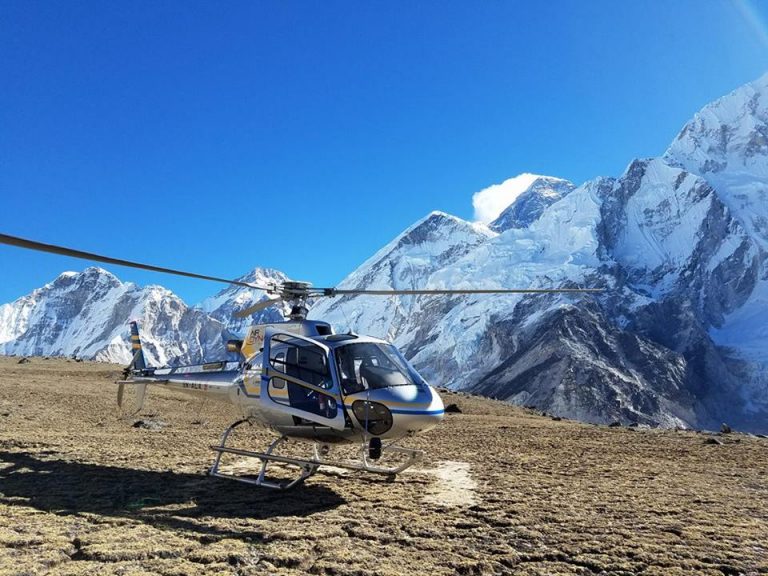
Mustang is famous for its wind. It picks up sharply by late morning, which is why every Muktinath flight leaves early, usually soon after sunrise. We collect you from your hotel, weigh passengers at the airport, and take off as soon as the pilot is happy with the weather reports.
The flight follows the Kali Gandaki gorge, one of the deepest valleys in the world, with Dhaulagiri on one side and the Annapurna range on the other. Keep your phone ready; the views of Nilgiri and Tukuche Peak are some of the best of the trip.
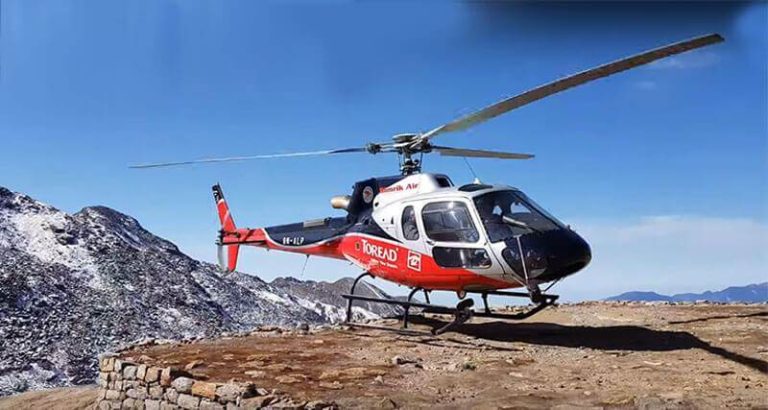
The helicopter lands at Ranipauwa, just below the temple. From there it is a short walk and a flight of steps up to the temple gate, around 10 to 15 minutes at a steady pace. At this altitude even fit people get out of breath quickly, so walk slowly and stop whenever you need to. Older pilgrims manage it fine when they take their time.
How much time do you get at the temple?
Usually between 30 minutes and an hour on the ground, depending on the package and the weather that morning. That is enough for a calm darshan if you know what you want to do before you land. Most pilgrims visit:
- The 108 Mukti Dhara, the bull-headed water spouts around the main temple, and the two kunds in front of it
- The main shrine of Lord Vishnu, one of the 108 Divya Desams and the only one outside India
- The Jwala Mai temple nearby, where a small natural flame burns beside running water
Buddhist visitors know the same site as Chumig Gyatsa, the “hundred waters”, and it is common to see Hindu and Buddhist pilgrims side by side.
If you plan to bathe under the spouts, bring a towel and a full change of clothes in a small bag. The water comes straight off the mountain and is extremely cold. Tell us in advance, because it affects how we plan your time on the ground.
Best time to go
March to May and September to November are the most reliable months for flying. Mustang itself stays fairly dry even in the monsoon, but between June and August clouds over Pokhara and the lower valley can delay take-off, so keep a spare day in your plan. December to February is clear but cold, and snow at the temple is possible.
A few practical tips
- Wear warm layers even in May. Muktinath at 9am is much colder than Pokhara.
- Carry some Nepali rupees in small notes for offerings and prasad.
- Wear shoes that are easy to slip off and on at the temple.
- Anyone with a heart or lung condition should check with their doctor first because of the altitude.
- Give us honest passenger weights when booking. It decides how many people fit in one helicopter.
- Build in a spare day. If the wind is too strong, we move the flight rather than take a risk.
Quick answers
Do Indians need a visa for a Muktinath helicopter tour?
No. Indian citizens need a valid passport or voter ID card to fly into Nepal, plus the Annapurna Conservation Area permit, which we arrange.
How long does the Muktinath helicopter yatra take?
About three hours from Pokhara or four hours from Kathmandu, including 30 minutes to an hour at the temple.
Can elderly parents do the Muktinath helicopter tour?
Most can. The walk from the helipad is short but uphill at 3,710 metres, so they should go slowly, and anyone with heart or breathing problems should see a doctor before travelling.
How much does a Muktinath helicopter tour cost?
At the time of writing, USD 3,000 per helicopter from Pokhara and USD 4,800 from Kathmandu, shared between up to five passengers.
Planning a Muktinath yatra? Send us your dates, the number of passengers and where you will start from, and we will reply with availability and the exact price. WhatsApp +977 9818392976.
Prices, permit fees and entry rules can change. Treat the figures above as a planning guide and confirm with us before you book.