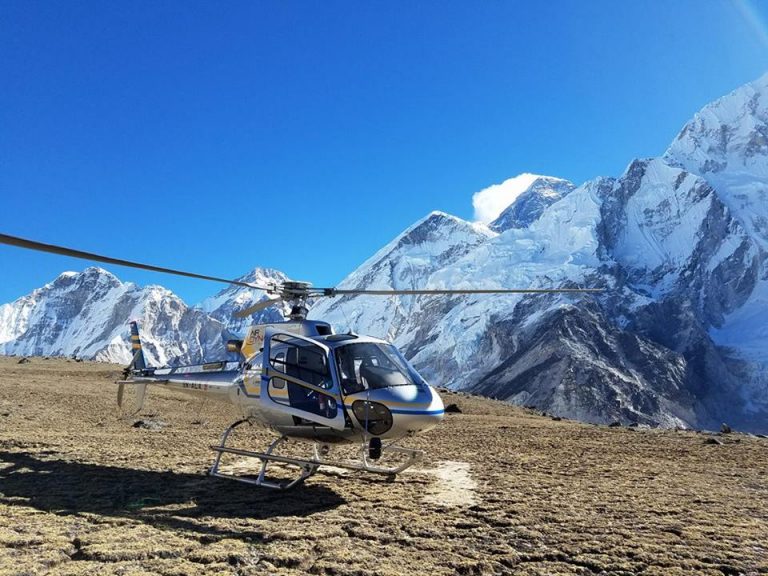
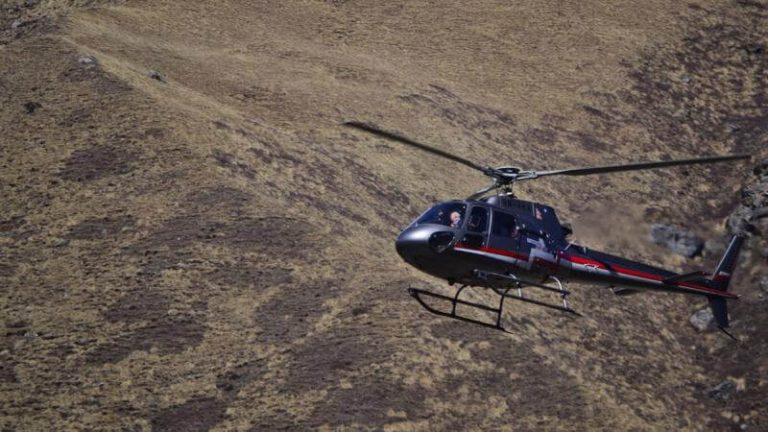
Short answer: Yes, for most healthy travellers of most ages. Our Everest Base Camp helicopter tour accepts children over 3 and has carried grandparents in their 60s and beyond. The trip lasts about 5 hours instead of 12 to 14 days on foot, the stops at altitude are brief, and each helicopter carries emergency oxygen. But it isn’t right for everyone. Serious heart or lung conditions, recent surgery, pregnancy and very young children need a conversation with a doctor first, and with us.
This guide covers who can join, what the day is like for a child or an older passenger, how altitude and cold affect people, what to ask your doctor, and how to choose between the tour options. If you have a specific situation, message us on WhatsApp before you book and we’ll tell you honestly whether it works.
Table of Contents
Key facts for families and older travellers
| Question | Answer |
|---|---|
| Minimum age | Children over 3 can join. For under 3s, contact us first |
| Older passengers | Seniors, including people in their 60s, fly regularly. Health matters more than age |
| Duration | About 5 to 6 hours, Kathmandu to Kathmandu |
| Departure | Hotel pickup around 5:30 AM, first flight about 6:30 AM |
| Highest point | Kala Patthar, 5,545 m |
| Time on the ground at Kala Patthar | 5 to 10 minutes on landing options |
| Breakfast stop | Hotel Everest View, about 3,880 m |
| Oxygen | Emergency oxygen on every helicopter |
| Group size | Up to 5 passengers, 3 on the high-altitude shuttle |
| Price | From USD 1,399 per person (shared) |
Why a helicopter suits families and older travellers
The Everest Base Camp trek is a superb walk, but it takes 12 to 14 days, climbs above 5,300 m, and depends on how well your body acclimatises. That rules it out for many families with younger children and for many older people. A helicopter removes the days of walking while keeping the view.
You leave Kathmandu in the morning, refuel in Lukla, fly over the Khumbu Glacier and Everest Base Camp, look at Everest, Lhotse, Nuptse and Ama Dablam from close range, have breakfast at a hotel with a view of the summit, and are back in your hotel before lunch. There’s no multi-day exertion, no nights at altitude, and no unpredictable Lukla flight schedule.
One guest who wrote to us said she couldn’t walk for many hours because of a leg condition and assumed she’d never see Everest. Another family travelled with parents in their 60s and said everyone enjoyed every minute. Those stories are typical of what we hear. The flight works because it asks for a seat, not stamina.
Is it suitable for children?
Yes, with a few sensible cautions. Children over 3 can join. The trip works best for children who can handle an early start, a long morning, and sitting still for stretches of the flight. In practice, that usually means ages 6 and up are the easiest, though younger children do fly.
What children tend to enjoy: the helicopter itself, the window seat, the sight of a glacier from above, and breakfast at Hotel Everest View. Children often talk about the flight for weeks.
What can be hard for them:
- The early wake-up. Pickup is around 5:30 AM. Pack breakfast snacks and let children sleep in the car.
- Cold. At Kala Patthar, temperatures can fall below −10°C. Children lose heat faster than adults, so layers, gloves and a hat matter more than usual.
- Ears. Pressure changes during climbs and descents can hurt small ears. Sipping water or a snack during descents helps.
- Boredom on the ground. The stop at Lukla is a refuel, not a sightseeing break. Bring something small to do.
- Motion sickness. Mountain air can be bumpy in the afternoon, which is one reason we fly early in the day. If your child gets carsick, ask your doctor about it in advance.
Before you book with a young child, tell us: their age, weight, whether they’ve flown before, and any medical conditions. If you’re travelling with a child under 3, message us first so we can advise on the seat arrangement and the altitude.
Is it suitable for seniors and elderly travellers?
Age alone isn’t the deciding factor. A fit 75-year-old who walks daily is usually a better candidate than a 45-year-old with an untreated heart condition. What matters is general health and how you cope with altitude and cold.
Things that usually work in seniors’ favour:
- No trekking. You don’t have to walk for days or sleep at altitude.
- Short exposure. The landing at Kala Patthar lasts 5 to 10 minutes. The helicopter engine stays running because of the temperature and air pressure, so you won’t be standing around.
- A comfortable pace. The rest of the morning is spent sitting in the helicopter or at breakfast.
- Oxygen on board if anyone feels light-headed.
Things to think about:
- Getting in and out. Boarding a helicopter means stepping up and ducking under the rotor line, and the ground at high altitude can be uneven and icy. If you use a walking aid or have limited mobility, tell us in advance so we can plan seat position and assistance.
- Thin air. At 5,545 m the air holds roughly half the oxygen found at sea level, so even a few steps can feel heavy. Most people manage the short landing fine, but some feel dizzy or breathless.
- Cold. Older passengers often feel cold sooner. A proper down layer helps.
- Medication. Bring your usual medicines in your day bag, and check with your doctor about timing and altitude.
Health conditions: talk to a doctor first
We’re a helicopter operator, not a medical service, so please treat this as a guide and not medical advice. The short stops make altitude illness uncommon on this tour, and most passengers feel fine. But high altitude is a real physical stress. Speak to your doctor before booking if you or a family member has any of the following:
- Heart disease, angina, a recent heart attack or an irregular heartbeat
- Lung disease such as asthma, COPD or a history of pulmonary embolism
- High blood pressure that isn’t well controlled
- A recent operation, particularly involving the chest, abdomen or eyes
- Sickle cell disease or blood-clotting disorders
- Epilepsy or a recent stroke
- Pregnancy. Many doctors advise against high-altitude flights, so ask yours
- Severe anxiety about flying or confined spaces
Ask your doctor about oxygen levels, medication, and whether a short exposure to about 5,500 m is reasonable for you. If you’re cleared, tell us the details so we can plan.
Altitude on the tour: what actually happens
The helicopter climbs gradually from Kathmandu (1,338 m) to Lukla (2,860 m), then up the valley. The higher stops are short. In a typical itinerary, the highest point is Kala Patthar at 5,545 m for 5 to 10 minutes, followed by a descent to Hotel Everest View at about 3,880 m for breakfast.
Because you spend so little time high up, and descend quickly, altitude sickness is rare on this tour. Some people notice light dizziness, a headache or shortness of breath at Kala Patthar. Emergency oxygen is always on board, and the pilot can descend at any time. On a trek, by comparison, you spend days building up altitude slowly and still risk illness.
For more on our safety approach, read are helicopter tours in Nepal safe?
Weight limits and seating for families
Weight matters more in the mountains than at sea level, because thin air reduces what a helicopter can lift. On our Everest flights, each sector carries roughly 450 kg in total, and the high-altitude shuttle beyond Pheriche carries fewer people, usually three, with a lower weight limit.
For families, this has practical effects:
- A family of 4 or 5 can fly together from Kathmandu to Lukla, but the high-altitude shuttle may split into two trips. If you’re on a private charter, we’ll organise this so no one waits alone.
- Children weigh less, which helps with total load, but they still count as passengers.
- Heavier passengers may need adjusted seating or, in some cases, an extra flight cost if the total weight exceeds safe limits.
We ask for each passenger’s weight when you book. It’s a safety requirement, and we treat it confidentially. For details, see helicopter weight limits in Nepal.
A typical day, with family notes
| Time | What happens | Family tip |
|---|---|---|
| ~5:30 AM | Hotel pickup, transfer to Tribhuvan Airport | Snacks and layers in the day bag |
| ~6:30 AM | Fly Kathmandu to Lukla (2,860 m) | Window seats for children, motion-sickness precautions |
| ~7:15 AM | Refuel at Lukla | Restrooms are available here |
| ~7:45 AM | Fly higher, shuttle from Pheriche | Group may split into two trips |
| ~8:15 AM | Kala Patthar (5,545 m), 5 to 10 minutes on landing options | Keep children close, layers on, photos fast |
| ~8:45 AM | Hotel Everest View (about 3,880 m) for breakfast | Warm drinks, a proper meal, a chance to relax |
| ~9:45 AM | Return via Lukla to Kathmandu | Most children sleep on the way back |
| ~10:30 to 11:00 AM | Back at your hotel | Rest, and plan the afternoon light |
Timings vary with weather and helicopter movements, so treat these as a guide.
Which option is best for families and seniors?
| Option | Price | Best for |
|---|---|---|
| Shared overfly | from USD 1,399 per person | Budget-conscious families, older travellers who don’t need to land. Overflies Everest Base Camp and Kala Patthar with breakfast at Hotel Everest View |
| Sharing with Kala Patthar landing | USD 2,200 (2 passengers max) | Couples or a parent and child who want to stand at Kala Patthar |
| Private charter with Kala Patthar landing | USD 4,900 (2 passengers) | Families wanting their own schedule, extra care, or a quieter flight |
Our advice:
- Families with young children often prefer a private charter, because you set the pace and don’t share the helicopter with strangers.
- Seniors who are unsure about altitude can choose the shared overfly. You see the same mountains without stepping onto the ground at 5,545 m.
- Multi-generational groups of 4 or 5 should ask for a private quote, since larger private groups are priced differently from the two-person options.
Fees for airport tax, Sagarmatha National Park entry and the local municipality are separate and total about NPR 7,000 per person. Breakfast at Hotel Everest View is optional at about USD 40 per person. Ask us how children are priced when you enquire.
Use our helicopter tour cost calculator for a quick estimate, or read our full Everest Base Camp helicopter tour details.
A gentler alternative: fly to Namche or Hotel Everest View
If the idea of 5,545 m feels like too much, there’s a lower-altitude choice. You can fly from Kathmandu to Namche Bazaar or to Syangboche, have breakfast at Hotel Everest View, and see Everest from about 3,800 m instead of 5,500 m. It’s shorter, cheaper and easier on the body, and it’s often the best fit for older travellers, families with small children, or anyone unsure about altitude.
See these pages for details:
- Kathmandu to Namche helicopter flight
- Helicopter breakfast at Hotel Everest View
- Everest helicopter tour with a Hotel Everest View stay
- Kathmandu to Lukla helicopter flight
What to wear and bring
The mountain air is far colder than Kathmandu, especially at Kala Patthar, where it can drop below −10°C. Dress in layers.
For everyone:
- Thermal inner layer and a fleece or mid-layer
- A windproof jacket, and a down jacket in winter
- Trousers, warm socks and sturdy shoes with grip
- Gloves, a warm hat or beanie, and a neck gaiter in winter
- UV sunglasses, sunscreen and lip balm
- A water bottle, phone or camera, and a power bank
For children: extra layers, spare gloves, a hat that stays on, snacks, and something small to do.
For seniors: medication in your day bag, warm layers you can add or remove easily, and comfortable footwear you can walk in.
Hand warmers are useful in winter. For a full list, see the clothing section on our Everest helicopter tour page.
Best season for families and older travellers
- Spring (March to May): Clear skies and milder temperatures. Good for photos and a popular choice for families.
- Autumn (September to November): Stable weather and crisp air. This is peak season, so book early.
- Winter (December to February): Sharp views and fewer visitors, but cold mornings. Bring serious layers if children or seniors are travelling.
- Monsoon (June to August): Lush landscapes, but clouds often block the mountains. It’s not a good time for a first-time flight with children.
Early morning flights offer the best chance of clear skies year-round.
What if the weather is bad?
Mountain weather changes quickly. If clouds or wind make the flight unsafe, we delay or reschedule. We offer flexible rebooking or a refund when flights can’t operate safely, and we’ll never fly if the pilot isn’t comfortable. For families on a tight schedule, leave a buffer day in your Nepal itinerary rather than booking the flight on your last morning. If you have an international flight the same day, keep at least 6 hours of buffer.
Insurance
We recommend travel insurance that covers medical emergencies, cancellations and helicopter evacuation in Nepal. Check that your policy covers flights to high altitude. This matters especially for older travellers and anyone with a pre-existing condition.
How to book with children or older passengers
When you enquire, tell us:
- Each traveller’s age and approximate weight
- Any medical conditions or mobility needs
- Whether you’d prefer shared or private
- Your preferred dates, plus flexibility
- Whether you’d like breakfast at Hotel Everest View
We’ll recommend an option and send a written quote with what’s included. See our step-by-step booking guide, or send an enquiry or message us on WhatsApp. You can also read our FAQs and guest testimonials.
If you’re wondering whether the helicopter lands at base camp itself, read can a helicopter land at Everest Base Camp?
Frequently asked questions
Is the Everest helicopter tour suitable for children?
Yes, for most children over 3 who can cope with an early start and cold air. Younger children need extra care with layers and ears. If your child is under 3, contact us before booking.
What is the minimum age for the Everest helicopter tour?
Children over 3 can join. We recommend contacting us first for any child under about 6 so we can advise on comfort and seating.
Is it suitable for elderly travellers?
Yes, if general health is good. Age isn’t a strict limit. Passengers in their 60s and older fly regularly, and the trip involves no trekking. Anyone with a heart or lung condition should consult a doctor first.
Is the Everest helicopter tour safe for seniors?
The flight is short at altitude, and each helicopter carries emergency oxygen. The main risks are cold, thin air and general health, which is why a doctor’s advice matters.
Can pregnant women take the Everest helicopter tour?
Many doctors advise against high-altitude flights during pregnancy. Please ask your doctor and contact us before booking.
Will my child get altitude sickness?
It’s uncommon on this tour because the high stops are brief. Some people, including children, feel light dizziness or a headache at Kala Patthar. Oxygen is on board and the pilot can descend.
How long do we stay at Kala Patthar?
On landing options, about 5 to 10 minutes. The helicopter engine stays running because of the temperature and air pressure, so the stop is brief.
Can the whole family fly in one helicopter?
Each helicopter carries up to 5 passengers from Kathmandu to Lukla, but the high-altitude shuttle carries about 3, so larger groups may fly in two trips. Weight limits apply.
Is a private charter better for families?
Often, yes. You control the timing and don’t share the helicopter with strangers. The shared flight is cheaper and works well for many families.
How cold is it at Kala Patthar?
It can fall below −10°C. Layers, gloves, a hat and a windproof jacket are essential.
Are there toilets on the tour?
Restrooms are available at Lukla and Syangboche. Use the facilities in Kathmandu before departure.
What if my child feels unwell during the flight?
Tell the pilot. Oxygen is on board and the pilot can descend at any time.
Do I need travel insurance?
Yes, we strongly recommend it. Check that it covers medical emergencies, cancellations and helicopter evacuation at altitude.
How much does the tour cost for a family?
Shared seats start from USD 1,399 per person. Private options with a Kala Patthar landing start from USD 4,900. Extra fees of about NPR 7,000 per person apply. Send us your group details for an exact quote.
Is there a gentler option for people who don’t want to go to 5,500 m?
Yes. A flight to Namche or Hotel Everest View lets you see Everest from about 3,800 m, with a shorter, cheaper trip.
The bottom line
The Everest helicopter tour is one of the few ways to see the world’s highest mountain up close without a fortnight of hard walking. That makes it realistic for children, grandparents and mixed-age groups. What decides suitability isn’t a birth certificate. It’s health, comfort with altitude and cold, and honest planning.
Talk to your doctor if there’s any doubt, tell us about everyone in your group, and we’ll help you choose the right option. Request a free quote or explore the Everest Base Camp helicopter tour.