Nepal Helicopter Service | Kathmandu, Nepal
An Everest helicopter tour is one of the most photogenic mornings you’ll ever have. It is also surprisingly easy to come home with blurry, reflection-filled shots. The flight is short, the helicopter vibrates, the windows reflect everything, and you get only a few minutes on the ground. A little preparation makes a big difference.
Table of Contents
Set your expectations
- You’ll shoot through windows. Doors stay closed on tour flights.
- Seats are assigned for balance. The crew seats passengers by weight, so you can’t always choose the side you want.
- Time on the ground is short. At Kala Patthar it is only a few minutes. At Hotel Everest View you have longer.
What to bring
- A phone is fine. Modern phones take excellent mountain photos.
- If you bring a camera, one zoom lens (something like 24–70 mm or 24–105 mm) is enough. Changing lenses in a helicopter is a recipe for dropped caps and dust.
- A spare battery. Cold drains batteries fast. Keep the spare in an inside pocket.
- A lens cloth. Windows and lenses pick up smudges.
- A soft rubber lens hood helps cut reflections when you get close to the window.
- Leave the tripod and drone behind. There’s no room for a tripod, and flying a drone requires permits.
Camera and phone settings
- Use a fast shutter speed. Around 1/1000 s or faster helps freeze vibration. Let ISO rise automatically.
- Shoot in bursts. One frame out of several is usually sharpest.
- Turn off the flash. It only lights up the window.
- Expose for the snow. On a phone, tap on a bright mountain and lower exposure slightly so peaks don’t turn white.
- Avoid heavy digital zoom. Crop later instead.
- For video, turn on stabilisation and film in short, steady clips.
Beating window reflections
- Bring your lens close to the window but don’t press it against the glass, or you’ll pick up vibration.
- Wear dark clothing. Bright jackets reflect in the window.
- Shade the lens with your hand if the sun is behind you.
- Skip the polarising filter. On aircraft windows it can create odd rainbow patterns.
What to look for in the air
- Leaving Kathmandu: flying east towards Lukla, the big peaks are usually on the left.
- Lukla’s runway: the famous sloping airstrip clinging to the hillside.
- Namche Bazaar: the horseshoe-shaped Sherpa town from above.
- Ama Dablam: one of the most beautiful mountains in the world, especially from Hotel Everest View.
- The Khumbu Glacier and base camp: look for the icefall and tents in season.
- Everest itself: the classic full view is from Kala Patthar.
On the ground at Kala Patthar
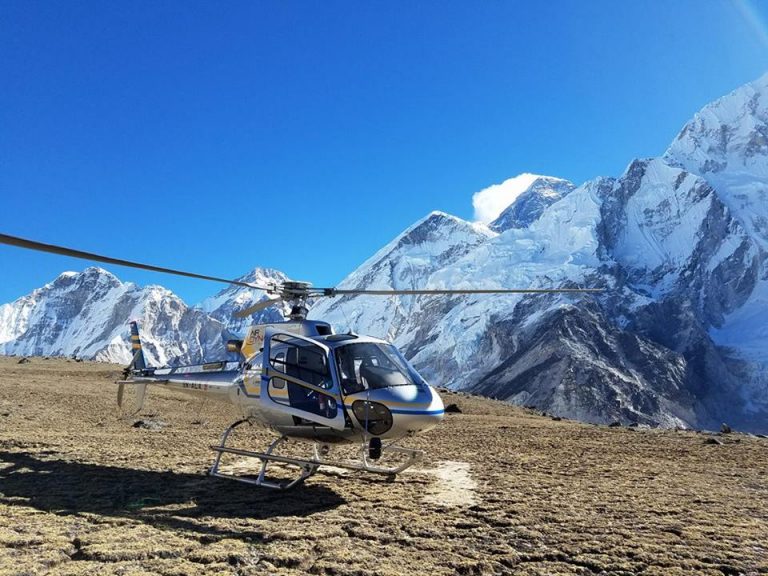
Plan your shots before you land, because you’ll only have a few minutes. Take the landscape first, then a photo of your group with Everest behind you, then the helicopter with the mountains. Walk slowly; at 5,545 metres even a few quick steps leave you breathless. Our guide to altitude sickness on a helicopter tour explains why.
Be considerate
You’ll be sharing windows with other passengers on a shared tour. Take turns, don’t lean across people, and ask before photographing others. If photography is the main purpose of your trip, a private charter gives you more freedom to position yourself and time your shots.
Quick answers
Can you take good photos from a helicopter window?
Yes. Use a fast shutter speed, shoot in bursts, keep the lens close to but not touching the window, and wear dark clothing to cut reflections.
Which side of the helicopter is best for Everest photos?
Flying east from Kathmandu towards Lukla, the high peaks are usually on the left, but seats are assigned by weight for balance.
Can I fly a drone on an Everest helicopter tour?
Not without the permits Nepal requires, and drones are not part of standard tours.
Planning a photography flight? Tell us what you want to shoot and we’ll suggest the best option. WhatsApp +977 9818392976.
These are general photography tips. The crew’s safety instructions always come first on board.