Nepal Helicopter Service | Kathmandu, Nepal
If you take a helicopter tour or charter in Nepal’s mountains, there’s a very good chance you’ll fly in an Airbus H125. It isn’t the biggest or the most luxurious helicopter in the world. It is simply one of the best at the thing that matters most here: flying and landing high.
Table of Contents
Airbus H125 (AS350 B3e): the Himalayan workhorse
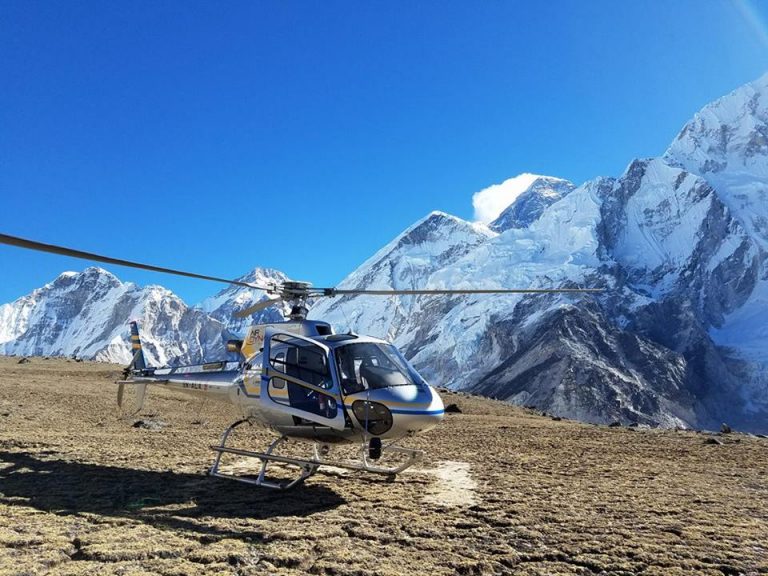
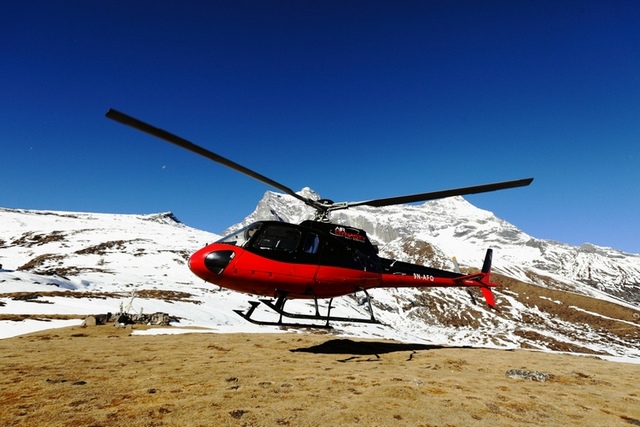
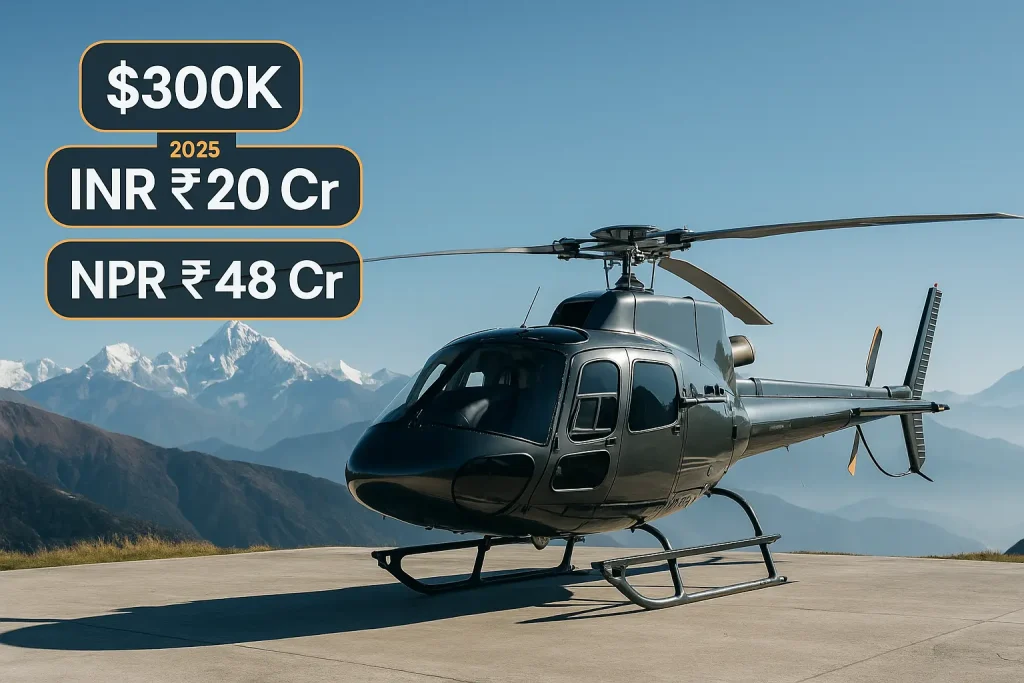
The H125, also known by its older name AS350 B3e, is a single-engine helicopter built for high and hot conditions. It is the standard aircraft for Everest Base Camp tours, Kala Patthar landings and high-altitude rescues across Nepal.
- Seats: a pilot and up to five passengers at lower altitudes
- Why it’s used: strong performance in thin air, reliability, and plenty of experience among Nepali pilots and engineers
- Famous moment: in May 2005, test pilot Didier Delsalle landed an AS350 B3 on the summit of Everest, a feat that showed what the type could do at extreme altitude
Even so, the H125 carries far less at 5,000 metres than it does in Kathmandu. That is why Kala Patthar landings are often limited to two passengers, as we explain in Helicopter Weight Limits in Nepal.
Bell 407
The Bell 407 is another single-engine helicopter used by some Nepali operators, often for mid-altitude flights and longer charters. It is comfortable and fast, and a good fit for routes that don’t involve the very highest landings.
Bell 206 LongRanger and Robinson R66
These lighter helicopters appear in some fleets for shorter sightseeing flights and transfers at lower altitudes. They are economical to run but have less power for high mountain work.
Mi-17
The Mi-17 is a large, twin-engine Russian-designed helicopter. In Nepal it is used mainly by the Nepalese Army and for heavy cargo and government missions, such as carrying supplies and equipment to remote areas. It isn’t used for typical sightseeing tours.
AgustaWestland AW139
The AW139 is a modern twin-engine helicopter operated by the Nepalese Army Air Service, used for transport and rescue missions.
What this means for you as a passenger
- You may not choose the exact aircraft. Operators assign helicopters based on the route, altitude, weather and passenger weight.
- More seats doesn’t always mean more passengers. On high routes, weight and altitude set the real limit.
- Headsets and noise. Helicopters are loud. Crews usually provide ear protection or headsets.
- Windows matter for photos. See our tips on photographing Everest from a helicopter.
Curious about helicopters beyond Nepal? Our older posts cover popular helicopters for joyrides and how much helicopters cost to buy and rent.
Quick answers
Which helicopter is used for Everest tours?
Most Everest helicopter tours and high-altitude rescues in Nepal use the Airbus H125, also known as the AS350 B3e.
How many passengers does an H125 carry?
Up to five passengers plus the pilot at lower altitudes. At very high landing sites such as Kala Patthar, usually only two.
Has a helicopter landed on top of Everest?
Yes. In May 2005, pilot Didier Delsalle landed an AS350 B3 helicopter on the summit of Everest.
Have a question about the aircraft for your flight? Ask us before you book. WhatsApp +977 9818392976.
Fleets change as operators buy and retire aircraft. This article gives a general picture of helicopter types used in Nepal in 2026.