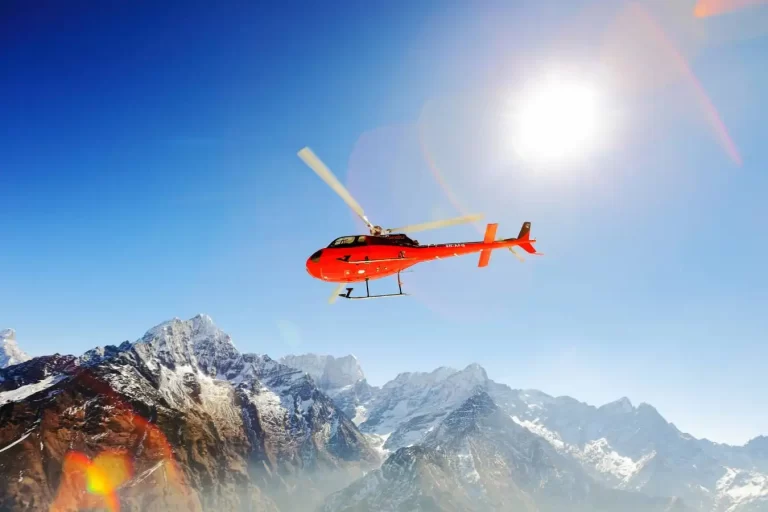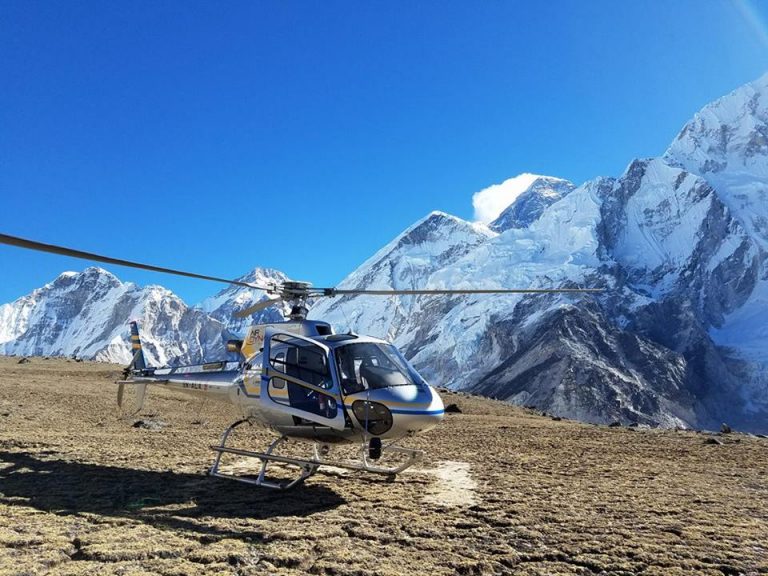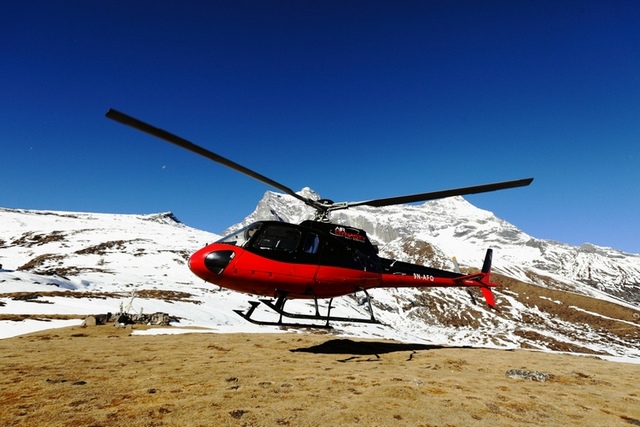
A commercial helicopter service in Nepal is any helicopter operation that carries passengers or cargo for hire, and it must be run by a company holding an Air Operator Certificate (AOC) from the Civil Aviation Authority of Nepal (CAAN). That covers mountain sightseeing, private charters, pilgrimage flights, rescue and medical evacuation, cargo lifts, filming and resort transfers. Three things shape every one of those flights: how much weight the helicopter can lift in thin air, how carefully the operation is regulated and flown, and what the low oxygen pressure at altitude does to passengers.
This guide explains all three in plain language, so you know what to ask before you book.
Table of Contents
How does a commercial helicopter service work in Nepal?
CAAN regulates all civil aviation in Nepal, including helicopters. It issues Air Operator Certificates, licenses pilots and engineers, approves operating procedures and inspects operators against Nepal’s civil aviation requirements. Nepal also builds international ICAO standards into its rules, covering licensing, airworthiness and safety management.
In practice, that means:
- The operator must hold an AOC. A company that sells tours without operating aircraft is an agent, and the flight itself must be flown by a licensed operator.
- Pilots and engineers are licensed. Mountain flying also needs specific experience, which good operators verify beyond the basic licence.
- Maintenance follows approved programmes. Operators must use approved engineering organisations, follow the manufacturer’s maintenance manuals, and keep traceable logbooks that CAAN can audit at any time.
Who flies commercial helicopters in Nepal?
Nepal has roughly a dozen licensed helicopter operators, including long-established names and newer companies, most based in Kathmandu with secondary bases in Pokhara. The standard mountain workhorse is the Airbus H125 (AS350 B3e). Some operators also fly the Bell 407GXP and Bell 505, and a few use the Robinson R66. For heavy cargo and large rescue jobs, some companies operate Mi-17 helicopters.
Why the H125? Its turbine engine delivers a large power margin in thin air, which is exactly what Himalayan flying demands. For more on aircraft, see which helicopters fly in Nepal.
Services that fall under commercial helicopter operations in Nepal:
| Service | Examples |
|---|---|
| Sightseeing and tours | Everest Base Camp, Annapurna Base Camp, Mardi Himal |
| Private charter | Helicopter charter service |
| Pilgrimage | Muktinath, Damodar Kunda, Lumbini |
| Trek support | Everest heli pickup, heli return after a trek |
| Rescue and medical evacuation | Helicopter rescue |
| Filming and photography | Photography and filming by helicopter |
| Resort transfers | Hotel and resort transfer |
Why do helicopter weight limits exist in Nepal?
Because the air gets thinner as you climb, and thin air means less lift and less engine power. A helicopter that carries five passengers comfortably at Kathmandu may only be able to carry two or three at Kala Patthar. That’s why operators plan every flight around total payload, not seat count.
Here’s how it works in practice:
- Everyone is weighed. Passengers and their day bags are weighed before boarding, and the pilot uses the numbers to check the aircraft’s weight and balance for that day’s temperature, altitude and fuel.
- There’s no single legal weight per person. Many operators plan around an average of about 80 to 100 kg per passenger, and heavier passengers may need fewer people on the flight or a private charter.
- A typical sector carries about 450 kg of payload. On our Annapurna Base Camp flight, for example, up to five passengers can fly, with a 450 kg total weight limit and six people including the pilot.
- High-altitude landings use shuttles. For Kala Patthar landings, the helicopter often drops most of the group at a lower point such as Pheriche, then flies up two passengers at a time.
The shuttle system is also why some shared tours took a long break from Kala Patthar landings after the July 2023 crash and the rules that followed. Landings for shared tours resumed in 2026 under the shuttle arrangement, and rules in the Everest region can change, so always confirm what’s possible for your date. Read can a helicopter land at Everest Base Camp? and our full helicopter weight limits guide.
Please give honest weights. Everyone is weighed at the airport anyway, and it’s far easier to sort out a problem by email a week before than at 6 AM on the day.
What are oxygen levels like on a Nepal helicopter tour?
There’s a common misunderstanding here. The air is still about 21% oxygen at every altitude, including the top of Everest. What changes is air pressure. As you climb, pressure falls, and with it the pressure of oxygen that pushes it from your lungs into your blood. Medical sources note that inspired oxygen pressure falls to about half its sea-level value at 5,500 m.
Here’s what that looks like along an Everest helicopter route. The percentages are approximate, based on the standard atmosphere, and real weather varies day to day:
| Place | Altitude | Approx. air pressure vs sea level |
|---|---|---|
| Kathmandu | 1,338 m | about 85% |
| Lukla | 2,860 m | about 70% |
| Muktinath | 3,710 m | about 63% |
| Hotel Everest View | 3,880 m | about 62% |
| Annapurna Base Camp | 4,130 m | about 60% |
| Everest Base Camp | 5,364 m | about 51% |
| Kala Patthar | 5,545 m | about 50% |
What does this mean for passengers? At Kala Patthar you’re breathing roughly half the oxygen pressure you’re used to, so you’ll get out of breath quickly, and you may feel light-headed if you move fast. But your time there is very short, and altitude sickness typically develops over hours, not minutes. That’s why helicopter operators keep high landings brief and descend quickly. For a full explanation of symptoms and who should check with a doctor, read will you get altitude sickness on a helicopter tour?
Oxygen on board. Our Everest flights carry emergency oxygen on every helicopter. Ask any operator whether it carries oxygen and how crew are trained to use it. Rules and practice differ between operators, so don’t assume.
How is safety managed on commercial helicopter flights in Nepal?
Nepal’s mountains are demanding, and honest operators say so. Key safety practices include:
- Visual flight rules. Most mountain flying is done by sight, so cloud and poor visibility are the biggest hazards. Pilots avoid ridgelines and cloud, and flights are cancelled or delayed when conditions aren’t safe.
- Early-morning flying. Mountain weather tends to deteriorate later in the day.
- Weight and balance checks before every flight, as described above.
- Pre-flight inspections and scheduled maintenance following manufacturer programmes.
- Experienced mountain pilots for high-altitude routes.
- Regulatory oversight. After the July 2023 Lamjura crash, CAAN introduced stricter supervision of helicopter operations, including daily oversight and central approval of flights. Our safety guide explains what changed and what the record shows.
How to choose a commercial helicopter operator in Nepal
Use this checklist before you pay:
- Ask who operates the flight and confirm the operator holds a valid AOC from CAAN.
- Ask which helicopter type will be used, and whether it’s suited to your altitude.
- Ask how weight is handled. A good operator weighs passengers and explains shuttles honestly.
- Ask about oxygen and emergency procedures.
- Ask what happens in bad weather. Look for a clear delay, reschedule or refund policy, and be wary of guarantees.
- Check what’s included. Fuel, landing fees, taxes, permits and insurance.
- Be careful with very low prices, which can signal overfilled flights or cut corners.
- Pay only through official channels and check the company’s registration. See our legal documents page and helicopter companies in Nepal list.
What are the main permits and costs?
Some routes need national park or conservation permits, such as the Sagarmatha National Park and Annapurna Conservation Area permits, and some packages include these while others don’t. Ask for a written list of inclusions. For prices, see our guides to helicopter charter costs in Nepal and the cost calculator.
Frequently asked questions
What is a commercial helicopter service in Nepal?
A helicopter operation that carries passengers or cargo for hire, run by a company holding an Air Operator Certificate from CAAN. It includes tours, charters, pilgrimage flights, rescue, cargo and filming.
Who regulates helicopter operators in Nepal?
The Civil Aviation Authority of Nepal (CAAN), which issues Air Operator Certificates, licenses pilots and engineers, and inspects operators.
Is there a weight limit for helicopter tours in Nepal?
There’s no single fixed limit per passenger. Operators plan around total payload, often about 450 kg per sector, and many plan around 80 to 100 kg per passenger.
Why is the Kala Patthar landing limited to two passengers?
Because at 5,545 m the air is thin and the helicopter can lift much less. Groups are often shuttled up two at a time.
How much oxygen is there at Kala Patthar?
The air is still about 21% oxygen, but air pressure is only about half of sea level, so each breath delivers about half as much oxygen.
Do helicopters in Nepal carry oxygen?
Our Everest flights carry emergency oxygen. Ask any operator to confirm what it carries and how crew use it.
Are helicopter tours in Nepal safe?
Most flights are uneventful, but mountain flying carries real risk from weather, terrain and altitude. Choosing a licensed operator and accepting weather delays reduces it.
Which helicopter is used in the Himalayas?
Turbine helicopters such as the Airbus H125 (AS350 B3e) are the standard, and the Bell 407GXP is also used.
How do I check that a helicopter company is licensed?
Ask for the operating company’s name and AOC details, and confirm it with the regulator.
When is the best time to fly?
October to November and March to May, in the early morning.
Conclusion
A commercial helicopter service in Nepal is more than a ride. It’s a regulated operation shaped by thin air, changing weather and careful weight management. Ask the right questions, give honest weights, expect delays when the weather says so, and choose a licensed operator. Request a free quote or explore our helicopter tours.